
Custom AI solutions are artificial intelligence systems built around a company’s own workflows, data and software to handle tasks that off-the-shelf tools cannot. They suit businesses with specialised requirements or complex integrations; for common tasks, ready-made tools or simple automation are usually cheaper and quicker to deploy.
Businesses often spend hours updating records, processing documents, sending follow-ups, and tracking approvals. While these tasks are necessary, they can slow down operations as a company grows.
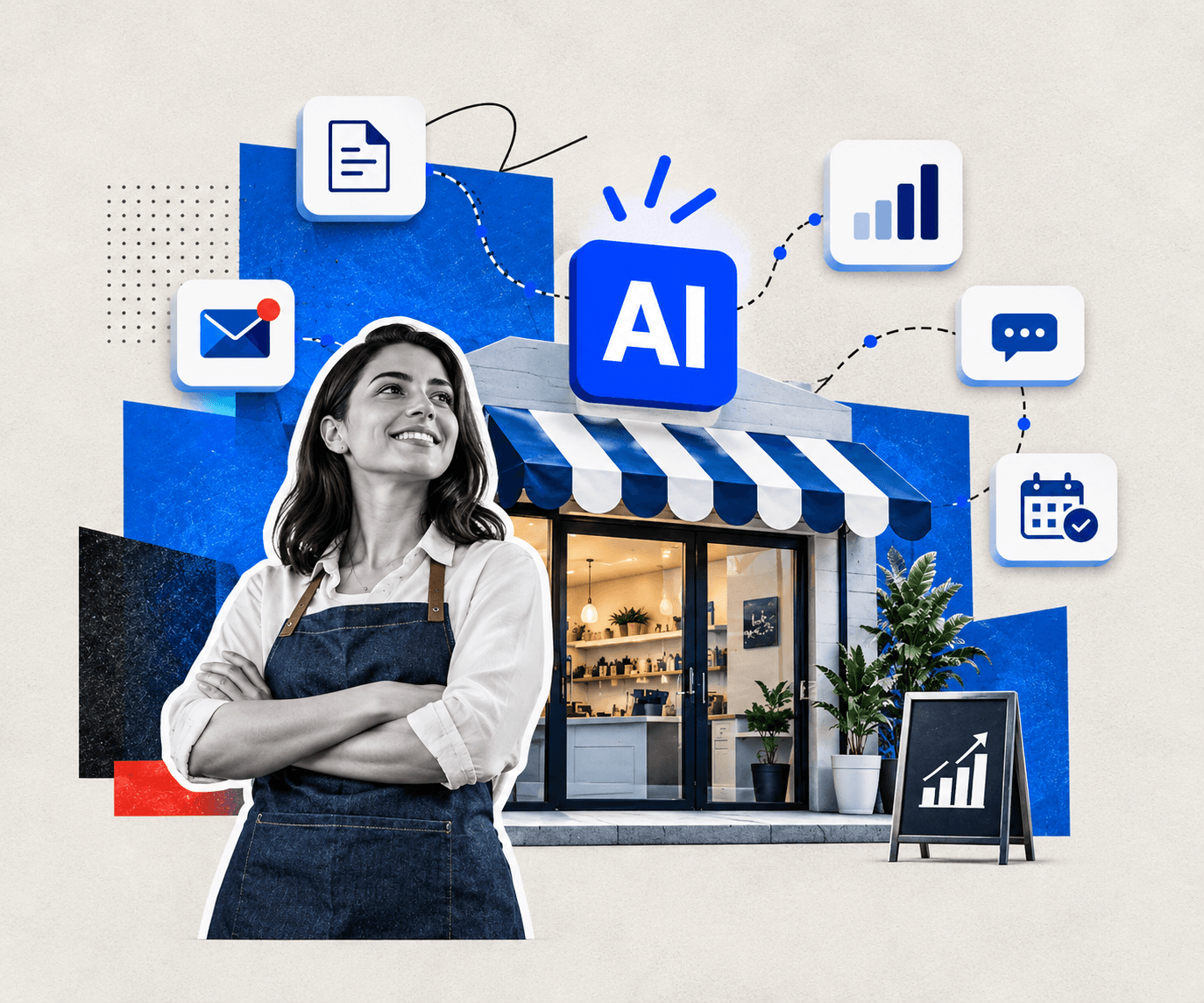
Custom AI solutions help businesses automate processes that require specialised capabilities, business-specific data, or integration with existing systems. They can reduce repetitive work, improve access to information, and support employees in handling complex workflows.
However, not every business needs custom AI. Some tasks can be handled using existing software or simple rule-based automation.
This guide explains what custom AI solutions are, the problems they solve, how they differ from ready-made AI tools, and when businesses should consider investing in them.
What Are Custom AI Solutions?
Custom AI solutions are artificial intelligence systems developed to address specific business requirements. Unlike general-purpose AI tools, they are designed around a company’s workflows, information, and existing software.
For example, a business might use a general AI chatbot to draft emails. But if it needs a system that reads incoming customer enquiries, checks information from its CRM, and prepares responses using internal business data, a tailored AI solution may be more appropriate.
Custom AI development can involve:
• AI workflow automation: Automating business processes that require interpreting information and completing actions across systems.
• Document processing: Extracting, organising, and validating information from invoices, forms, and reports.
• AI assistants: Helping employees retrieve information from company documents and connected systems.
• Predictive analytics: Identifying patterns in historical data to support forecasting and decisions.
• System integration: Connecting AI capabilities with existing CRM, ERP, accounting, or operational software.
The purpose of custom AI is not to replace every existing tool. It is to address business requirements that standard software cannot adequately support.
What Problems Can Custom AI Solve for Businesses?
As businesses grow, manual processes can become harder to manage. Employees may spend more time transferring information, checking records, and coordinating work across departments.
1. Repetitive administrative tasks
Employees frequently perform activities such as updating records, categorising requests, and preparing reports.
Some tasks can be handled through traditional automation. When they involve interpreting complex messages or documents, AI can reduce that manual effort.
2. Disconnected business systems
Businesses often use different tools for sales, finance, HR, and operations.
When these systems are not connected, employees may repeatedly copy information between them.
Integrations can reduce this work, while AI may add value when information must be interpreted, classified, or summarised before it moves between systems.
3. Delays in processing requests
Customer enquiries, internal requests, and business documents may require employees to read information and decide what should happen next.
AI can assist with classification and information extraction, while automated workflows route tasks to the appropriate person or system.
4. Difficulty accessing business information
Important information may be spread across documents, emails, and internal software.
A tailored AI assistant can help employees find relevant information from approved sources, subject to access permissions and accuracy checks.
5. Limited operational visibility
When processes are managed through emails and spreadsheets, teams may struggle to track progress.
Connected workflows and reporting systems can provide better visibility. AI can also help analyse information or identify patterns that need attention.
When Does a Business Actually Need Custom AI?
A business should consider custom AI when existing tools cannot adequately handle a specific requirement.
For example, sending an automatic reminder does not usually require AI. But interpreting hundreds of differently worded customer requests and routing them based on their meaning may benefit from AI.
Common signs that custom AI may be worth exploring include:
• Employees regularly interpret large volumes of unstructured information.
• Existing software cannot support an important business-specific process.
• Teams need to retrieve information from several internal systems.
• Repetitive work involves complex documents or variable inputs.
• A company needs AI capabilities integrated into its existing software.
• Standard AI tools do not meet its workflow, security, or customisation requirements.
Before developing a custom solution, businesses should assess whether their requirements can be met through existing products, integrations, or simpler automation.
Custom AI Solutions vs. Off-the-Shelf AI Tools
Businesses can choose between existing AI tools, standard workflow automation, and custom AI development.
Each option serves a different purpose.
| Factor | Off-the-shelf AI tools | Custom AI solutions |
| Purpose | General or commonly supported tasks | Specific business requirements |
| Customisation | Limited to available features | Designed around defined needs |
| Integration | Depends on built-in integrations | Can be developed for compatible internal systems |
| Implementation | Often quicker to start | Usually requires planning, development, and testing |
| Cost | Often subscription-based | May include development and ongoing operating costs |
| Maintenance | Mainly handled by the provider | Requires an agreed support and maintenance approach |
| Best suited for | Common tasks with standard requirements | Specialised workflows not adequately supported by existing tools |
Which option should your business choose?
Choose an existing AI tool when you need capabilities such as drafting content, summarising documents, or answering general questions.
Choose traditional workflow automation when tasks follow predictable rules, such as sending reminders or transferring structured information between systems.
Consider custom AI when a workflow requires specialised interpretation, integration with internal data, or capabilities that available products cannot provide.
Custom development is not automatically the better choice. It should solve a clearly defined problem that justifies the additional investment.
How Do Custom AI Solutions Automate Business Workflows?
A business workflow is a series of steps required to complete a task, such as handling a sales enquiry, processing an invoice, or approving a purchase request.
Custom AI can support these workflows by interpreting information and helping connected systems perform appropriate actions.
Example: Automating a sales enquiry workflow
Consider a B2B company receiving customer enquiries through its website and email.
In a manual process, employees may need to:
- Read the incoming enquiry.
2. Identify the customer’s requirements.
3. Enter the information into the CRM.
4. Assign the enquiry to a salesperson.
- Prepare a follow-up.
An AI-enabled workflow could perform some of these steps automatically.
Customer enquiry received → AI identifies requirements → CRM record created or updated → Enquiry assigned → Follow-up prepared → Employee reviews when needed.
In this example, AI helps interpret the enquiry, while traditional automation handles CRM updates and task assignment.
The workflow can also flag incomplete or uncertain information for human review.
This combination allows businesses to reduce manual processing without relying on AI for every decision.
Practical Use Cases of Custom AI Solutions
Custom AI can support different business functions depending on the available data, systems, and requirements. Here is how companies have used it to remove manual work.
1. Sales and customer relationship management
Custom AI can interpret enquiries, update the CRM, and help sales teams prioritise follow-ups. Example: Vendasta automated lead handling so records are created and leads routed to the right rep automatically, uncovering about $1 million in potential revenue and saving more than 282 working days of admin a year. Vendasta built this with off-the-shelf tools such as Zapier and ChatGPT, a reminder that not every gain needs custom development.
2. Customer support
AI assistants can answer routine questions from approved company information and pass complex issues to employees. Example: in its first month, Klarna’s AI assistant handled 2.3 million conversations, two-thirds of its support chats, while customers could still reach a live agent.
3. Finance and document processing
AI-enabled document processing can extract fields from invoices and contracts and prepare them for validation. Example: JPMorgan Chase’s in-house COIN software reviews commercial loan agreements in seconds, work that previously took 360,000 hours a year.
4. HR and employee support
AI assistants can answer policy and onboarding questions and handle routine HR requests. Example: IBM’s AskHR handles 94% of common questions without passing them to a person and has cut HR support tickets by 75% since 2016.
5. Manufacturing and operations
AI can support quality inspection, equipment monitoring, and operational analysis when suitable data is available. Example: at its Regensburg plant, BMW Group is piloting AI that creates a tailored quality inspection plan for each of the roughly 1,400 vehicles built daily.
6. Logistics and supply chain
AI can support route planning, demand forecasting, and operational decisions. Example: UPS’s custom route optimisation system, ORION, had saved more than $320 million by December 2015.
Most of these examples come from large organisations, but smaller businesses can apply the same approach to a single workflow. Actual outcomes depend on implementation quality, data availability, and the business environment.
How Much Does Custom AI Development Cost?
The cost of custom AI development depends on what the business wants to build and how the solution will operate.
A system that processes documents from one source may have different requirements from an AI assistant connected to several business-critical applications.
Main factors affecting cost
• Project scope: The number of workflows and capabilities being developed.
• Integration requirements: The complexity of connecting existing business software.
• Data preparation: The effort needed to organise, clean, and secure information.
• AI capabilities: Whether the solution requires document processing, language models, predictive systems, or other capabilities.
• Testing and security: Validation, access controls, monitoring, and reliability requirements.
• Ongoing usage: AI model charges, hosting, software subscriptions, and infrastructure.
• Maintenance: Updates, performance monitoring, and support after deployment.
Businesses should consider both initial development expenses and ongoing operating costs.
Rather than starting with a large implementation, a limited pilot can help determine whether the expected benefits justify further investment.
How to Implement Custom AI in Your Business
Successful AI implementation begins with understanding the business problem.
Step 1: Identify a specific workflow problem
Choose a process that consumes time, creates delays, or requires repeated interpretation of information.
Step 2: Understand the current workflow
Document the inputs, tasks, systems, employee responsibilities, and expected outputs.
This helps identify which steps can be automated and which require human judgement.
Step 3: Assess existing software and data
Check whether the necessary information is accessible, accurate, and suitable for the intended AI application.
Also evaluate available integrations and security requirements.
Step 4: Select the appropriate solution
Determine whether an existing AI tool, standard automation, or custom development best meets the requirement.
Step 5: Build and test a pilot
Start with a limited implementation and test it using representative business scenarios.
Evaluate accuracy, processing time, employee involvement, and error handling.
As Google Brain co-founder Andrew Ng writes in his AI Transformation Playbook, “it is more important for your first few AI projects to succeed” than for them to be the most valuable.
Step 6: Measure business value
Compare the original process with the new workflow.
Useful metrics may include:
• Time spent per task
• Number of manual steps
• Processing and response times
• Correction or error rates
• Operational costs
• Employee review requirements
Step 7: Deploy, monitor, and improve
Once the pilot meets the required standards, the business can deploy it more broadly.
Continue monitoring performance and update the system as business requirements change.
What Are the Risks and Limitations of Custom AI?
Custom AI can improve workflows, but it also introduces challenges that businesses should evaluate before implementation.
Inaccurate outputs
AI may misunderstand information or produce incorrect responses. Important outputs should be validated, especially when they affect customers, finances, or operations.
Poor data quality
Incomplete or inconsistent business information can reduce the reliability of AI systems.
Integration challenges
Older software or restricted systems may require additional development work to support integrations.
Data privacy and security
Businesses must consider access permissions, confidential information, data handling, and applicable legal requirements.
Ongoing maintenance
Custom AI systems may require updates, testing, and monitoring as software, data, and business processes change.
Employee adoption
Employees need to understand how the system works, when to trust its outputs, and when to intervene.
These limitations do not mean businesses should avoid AI. They highlight the importance of planning, testing, and human oversight.
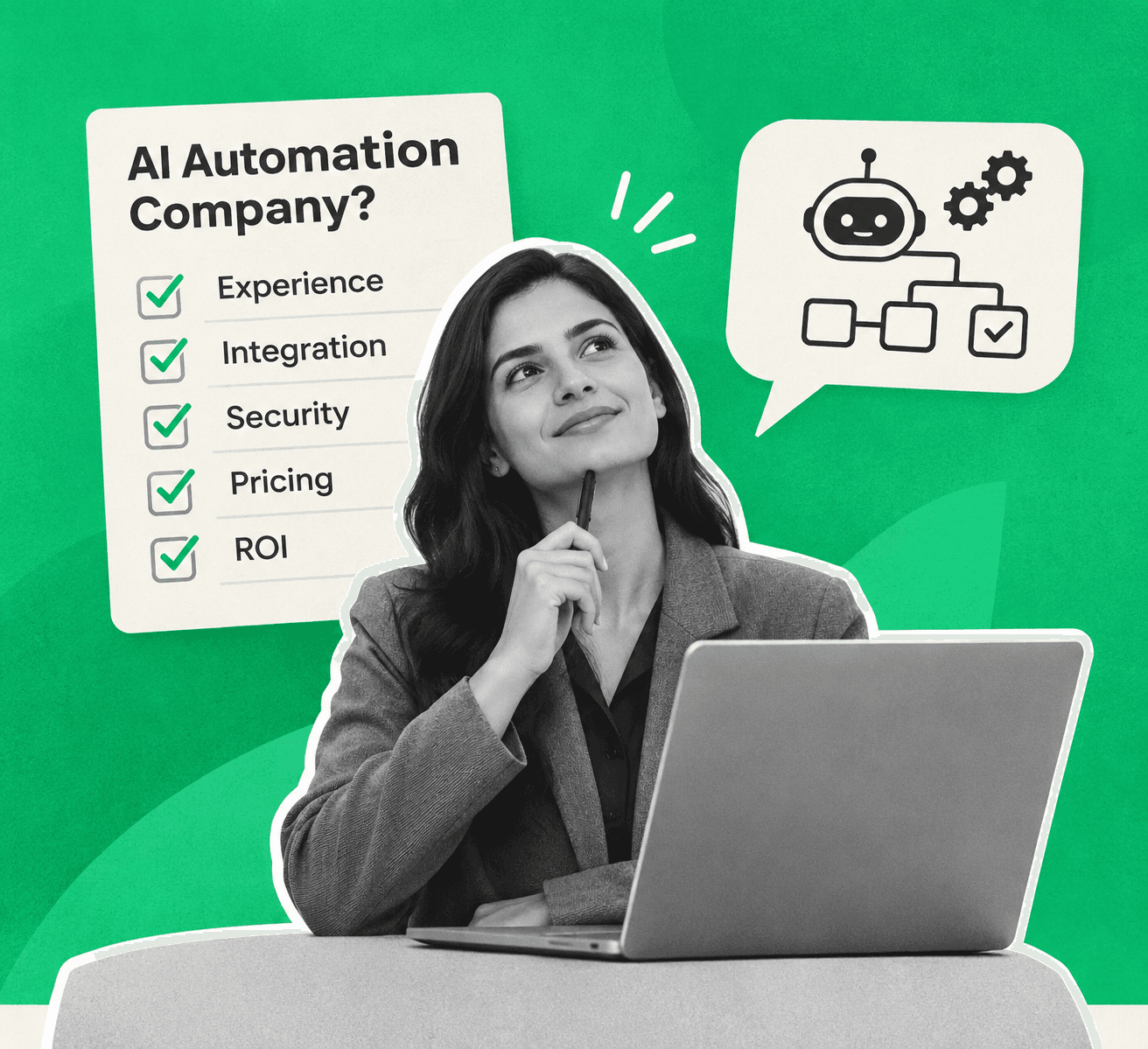
How to Choose a Custom AI Development Company
Choosing the right development partner is important because custom AI projects involve both business processes and technical implementation.
Before selecting a provider, consider the following questions.
Does the company understand your business problem?
A suitable partner should identify the workflow issue and expected outcome before recommending technology.
Can the solution integrate with existing systems?
Check whether the provider can work with your current CRM, ERP, accounting, or operational software.
How will accuracy and security be managed?
Ask about testing, data handling, access controls, monitoring, and human review.
What happens after deployment?
Clarify ongoing support, maintenance responsibilities, and how issues will be resolved.
How will success be measured?
Agree on measurable outcomes such as reduced processing time, improved accuracy, or lower manual effort.
The right partner should help determine whether custom AI is necessary rather than recommend development for every problem.
How Falcon Reality Helps Businesses Build Custom AI Solutions
Falcon Reality helps businesses explore, develop, and implement AI solutions designed around their operational requirements.
The focus is on identifying business problems, understanding existing workflows, and developing solutions that can work with current systems. Recent projects include cutting charter-party (shipping contract) drafting time from 8 hours to 4 for Howe Robinson Partners, cutting video production cost per minute by about 87.5% for ISF, and bringing CareUp’s scattered revenue data into one dashboard.
Areas of implementation can include:
• AI-powered workflow automation
• Custom AI assistants
• Document processing and information extraction
• CRM and operational system integrations
• AI applications for specific business requirements
The implementation approach involves understanding the workflow, evaluating technical requirements, developing the solution, testing its performance, and preparing it for deployment.
Rather than introducing AI into every process, the objective is to identify opportunities where AI can deliver practical operational value.
Conclusion: Is Custom AI Right for Your Business?
Custom AI solutions can help businesses reduce repetitive work, improve information access, and support more efficient operations.
However, the decision to invest in custom development should depend on the problem being solved.
If existing software can handle the requirement effectively, a simpler solution may be more appropriate. When a business needs specialised AI capabilities, integration with internal systems, or workflows tailored to its operations, custom development may be worth considering.
The best starting point is to identify one business problem, evaluate the available options, and test the solution before expanding. Talk to Falcon Reality to find the right first workflow for your business.