
 Maritime

The Changing Demands of Modern Ship Management
Ship management has always been about coordination. Today, that coordination happens across thousands of documents, emails, maintenance records, class requirements, procurement systems, and vessel reports.
The latest wave of maritime AI isn't replacing ship managers. It's helping them find information faster, analyse operational data, reduce repetitive work, and make better decisions with the information they already have.
This fits into the wider maritime push toward better digital information exchange. The IMO’s digitalisation work focuses on interoperability, system standardisation and data sharing, while its Maritime Single Window framework is intended to reduce duplicated submissions and administrative burdens during port calls.
This article explores seven practical AI use cases in ship management and what teams should consider before implementing them.
Why Are Ship Management Teams Turning to AI?
Modern ship management involves coordinating information across vessels, shore teams, systems and external stakeholders.
-
Scattered information: Maintenance records, technical reports, manuals, certificates and safety records often sit in different systems.
-
Searching old records: Teams may know a problem has happened before but still spend time finding the relevant history.
-
Repeated data entry: Information received through emails or documents often needs to be manually entered into another system.
-
Email overload: Important updates, actions and approvals can get buried in long ship-to-shore email threads.
-
Repetitive documentation: Operational and compliance information often needs to be read, checked and processed manually.
7 Practical AI Use Cases in Ship Management
Use Case 1: Finding Information Across Vessel Records
Imagine an engineer dealing with an equipment problem they are sure has happened before.
The answer might already exist.
But where?
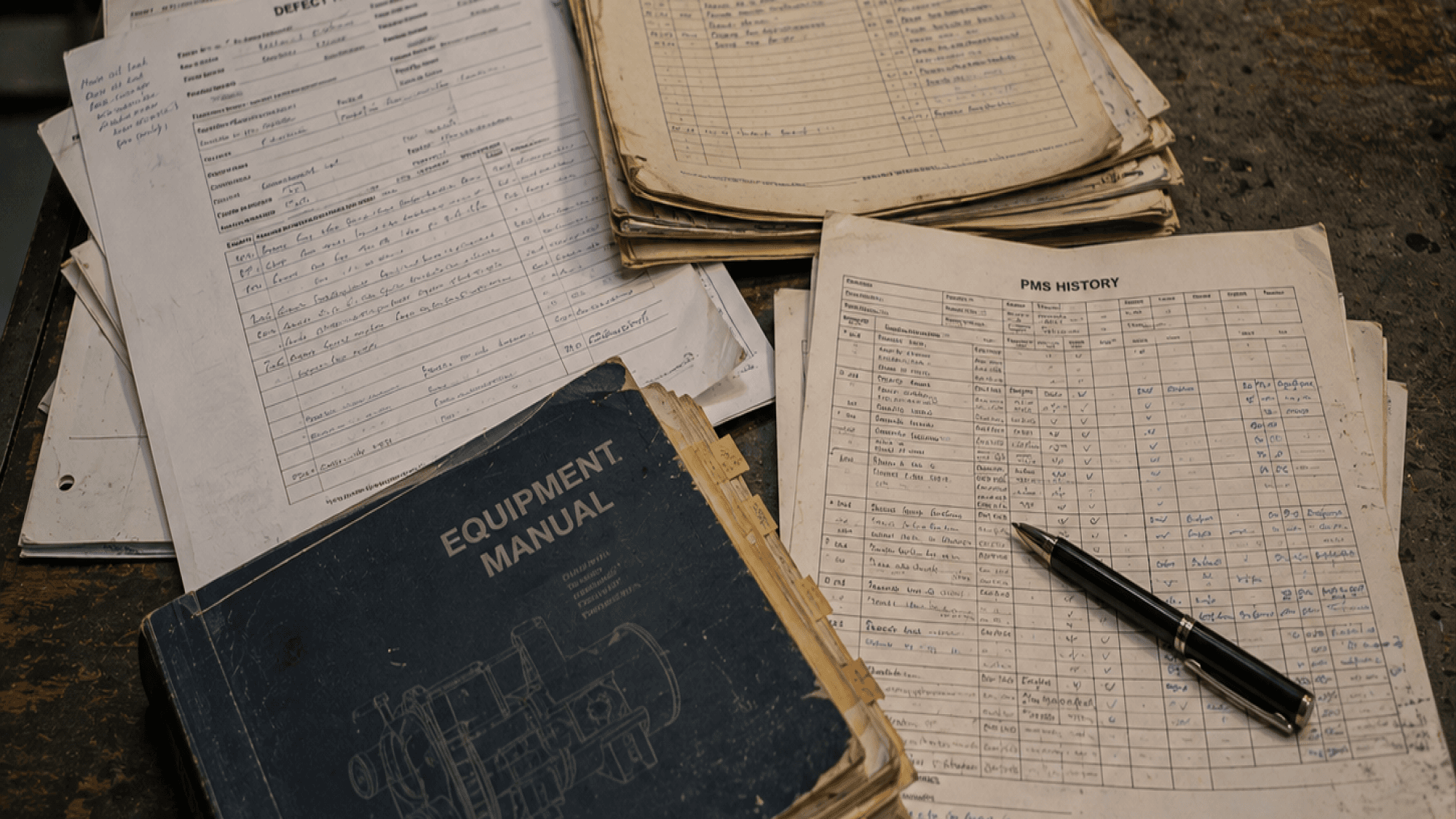
It could be in a defect report from two years ago, a service report, PMS history, an email from a superintendent or an equipment manual.
Someone still has to find it.
AI-powered search could change how teams retrieve this information.
Instead of searching only by filenames or keywords, a user could ask:
“Has this vessel had this problem before?”
The system could then search the available records and surface relevant information for the engineer or superintendent to review.
The value here is simple: Ship managers don't always need more data. Sometimes they need better access to the data they already have.
Use Case 2: Vessel Maintenance & Troubleshooting
When equipment fails, engineers rarely make decisions based on a single piece of information.
They may need to check:
- Previous defects
- Maintenance history
- Equipment manuals
- Service reports
- Earlier corrective actions
- Similar problems on other vessels
Finding and connecting all of that information takes time.
AI can help by retrieving relevant maintenance history and technical information around a particular problem. This is consistent with the direction of condition-based maintenance research in shipping, where operational data, physics-based models and AI are combined to diagnose machinery faults and identify declining performance.
For example, if the same pump has failed several times, the system could surface previous defects, repairs and related records.
That gives the engineer more context before troubleshooting the current problem.
The distinction is important: AI does not need to replace the engineer's judgement to be useful.
Helping an engineer find the right history faster can itself be valuable.
Use Case 3: Maritime Document Processing
Ship management comes with documents. Lots of them.
Certificates, inspection reports, service reports, forms, invoices and operational reports constantly move between vessels, shore teams and external parties.
A surprisingly common workflow still looks like this:
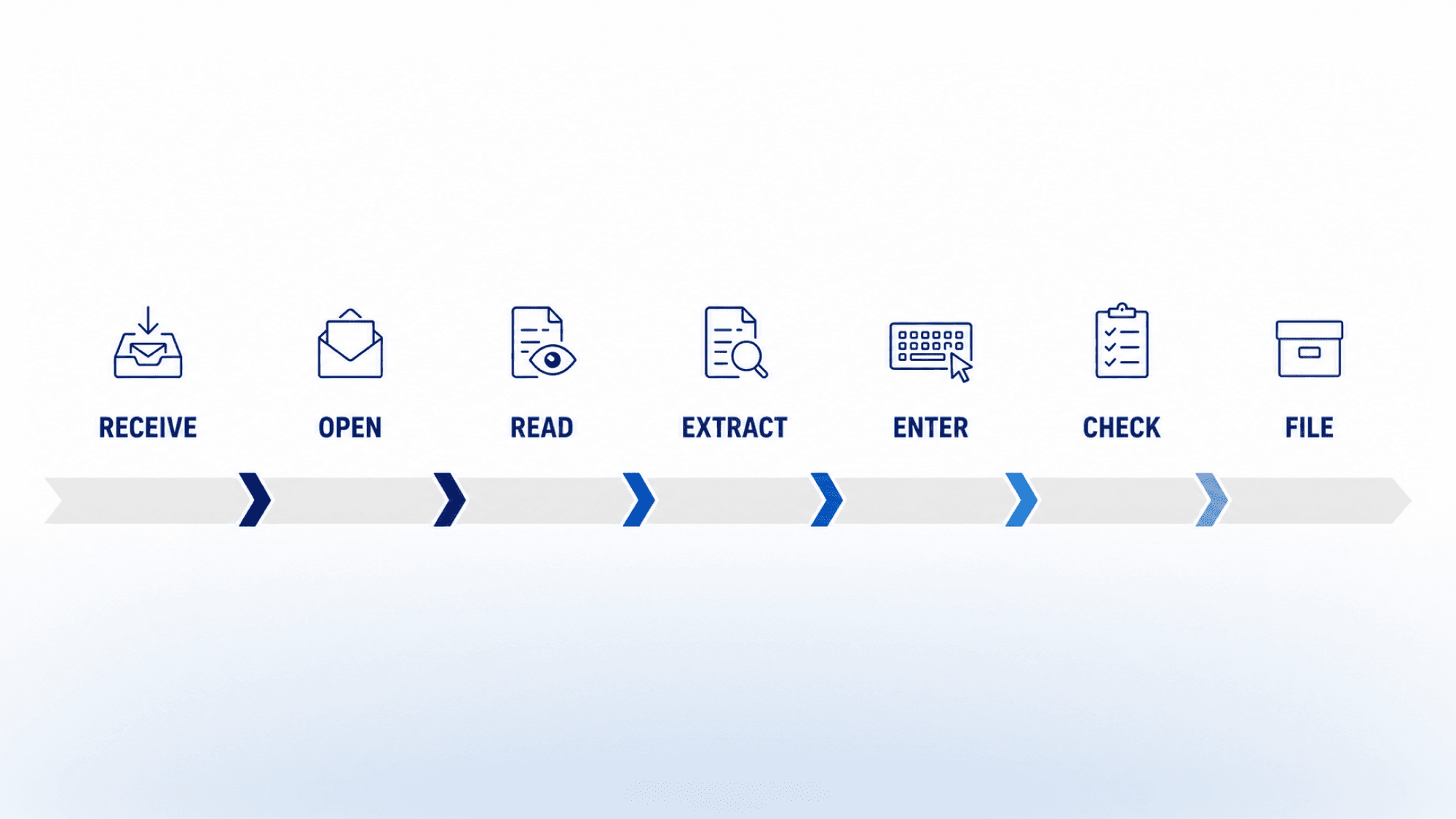
AI-based document processing can reduce some of that repetitive work.
A system can potentially identify the type of document received, extract important fields, summarise longer documents or flag missing information for someone to review. Similar AI applications are already being explored across trade and logistics for document summarisation, information extraction, data harmonisation and compliance support.
The point is not that AI can read a PDF.
The useful part is what happens afterwards.
Instead of a person repeatedly moving information from one document into another system, AI can prepare that information for verification.
This fits into the wider maritime push toward better digital information exchange. The IMO's digitalisation work specifically includes improving interoperability, data sharing and reducing unnecessary administrative work.
Use Case 4: Safety, Compliance and ISM Documentation
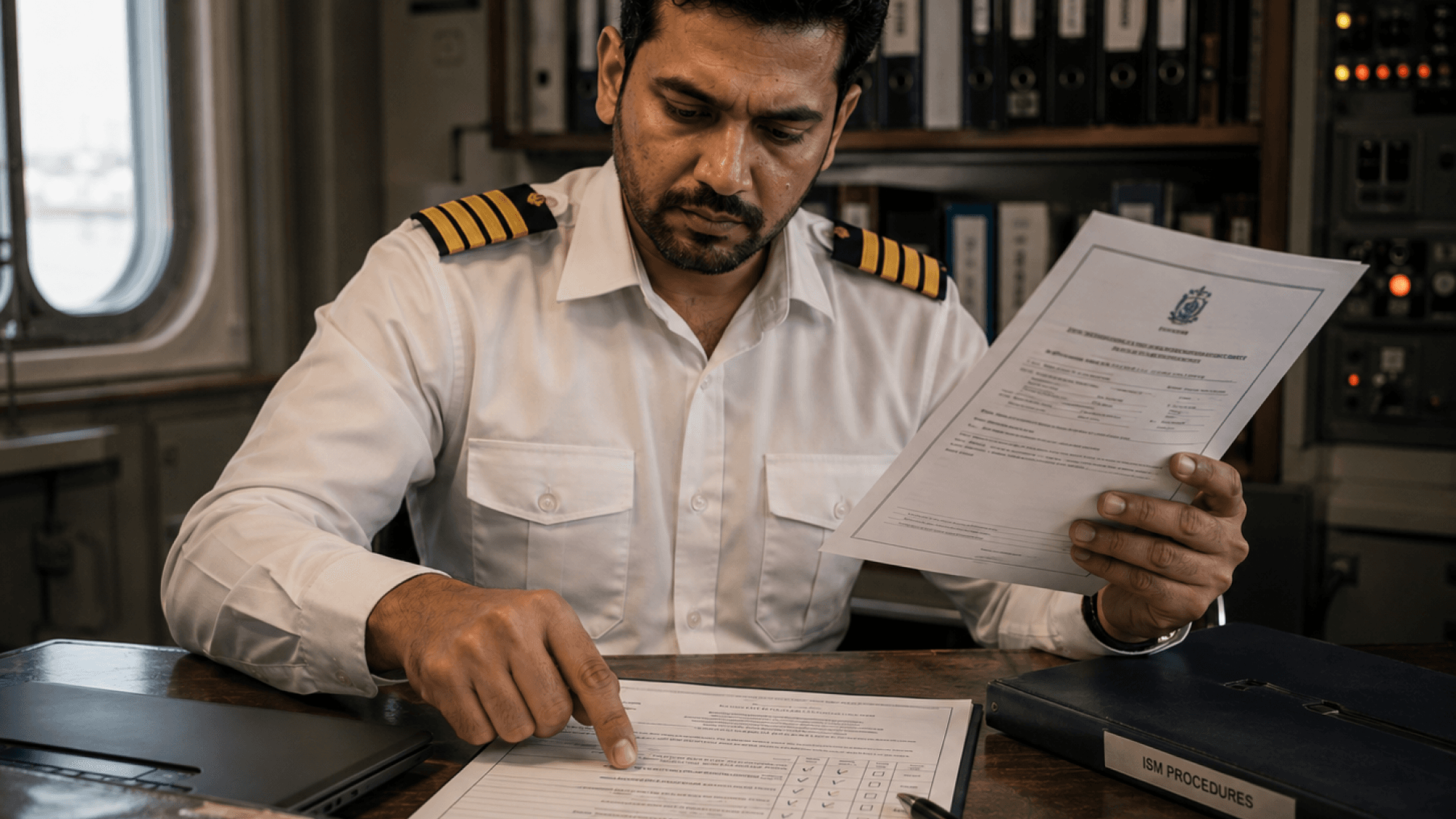
Safety management depends heavily on accurate and accessible information.
Ship management teams may need to work with procedures, certificates, inspection records, safety reports, company requirements and other compliance documentation.
Questions can arise quickly:
- Which procedure applies?
- Where is the latest version?
- Is a required document missing?
- Has a similar safety issue occurred before?
- What corrective action was taken previously?
AI can assist by searching approved records and procedures, summarising relevant information and helping prepare repetitive documentation.
However, safety and compliance are also areas where the limits of AI matter.
AI can help people find and prepare information. It should not remove the responsibility for people to verify that information and make the final decision.
Human judgement remains central to safe ship operations. The IMO’s ISM Code emphasises risk assessment, appropriate safeguards, management commitment and the competence of people working at sea and ashore.
Use Case 5: AI for Ship-to-Shore Communication
A superintendent responsible for several vessels can have multiple operational conversations happening at the same time.
One vessel may report a machinery defect. Another may need approval. A third may send supporting documents.
The information is technically available. Understanding the current situation is the harder part.
AI can help organise this communication by:
- Summarising long email threads
- Identifying action items
- Highlighting deadlines
- Categorising messages
- Extracting important operational information
- Preparing routine responses for review
Instead of reading an entire chain to reconstruct what happened, a superintendent could get a simple summary:
Issue: Equipment defect
Action taken: Inspection completed
Current status: Spare requested
Pending: Shore approval
The original communication remains available when more detail is needed.
The benefit isn't fewer emails for the sake of fewer emails.
It is making sure important information doesn't disappear inside them.
Use Case 6: Fleet Performance & Operational Analysis
Managing one vessel gives you one picture.
Managing a fleet creates another challenge entirely.
Ship managers need to understand what is happening not only vessel by vessel, but across the fleet.
Questions become broader:
- Which vessels repeatedly experience the same equipment issue?
- Where is performance changing?
- Are similar defects appearing across sister vessels?
- Which operational problems keep returning?
- Are there unusual patterns that deserve investigation?
AI can help analyse larger volumes of fleet information and identify patterns or unusual changes that deserve attention.
That doesn't mean managers need another dashboard filled with numbers.
The more useful outcome is helping them answer: “What should I be looking at?”
AI can narrow a large amount of operational information into a smaller number of issues worth investigating.
People can then determine what those patterns mean and what action, if any, should follow.
Use Case 7: Fleet Knowledge Management
Every shipping company builds knowledge over time.
A chief engineer learns something from solving an unusual machinery problem. A superintendent remembers how a similar defect was handled three years ago.
A vessel records a near miss. Another vessel discovers a better way of dealing with a recurring issue.
Some of that knowledge stays with people. Some get documented.
But documented knowledge is not automatically usable knowledge.
A solution buried inside a five-year-old report is only useful if someone knows it exists and can find it.
This creates a bigger question for ship management:
Can the next vessel benefit from what the previous vessel already learned?
AI creates an interesting possibility here.
Instead of treating every defect report, maintenance record, service report and operational email as an isolated document, relevant historical knowledge could be retrieved when someone actually needs it.
A superintendent dealing with an equipment problem could see how similar problems were handled previously.
An engineer could find related vessel history without knowing the exact filename or date.
A lesson learned on one vessel could become easier to access elsewhere in the fleet.
What Ship Managers Should Consider Before Implementing AI
The biggest question shouldn't be: “Where can we add AI?”
It should be: “Where are our people losing time today?”
Once that problem is clear, there are a few practical questions worth asking.
Does it fit the existing workflow?
If a new AI tool requires crews to constantly feed another system with information, it may simply create another administrative task.
Can users verify the information?
For operational decisions, people should be able to check where important information came from rather than blindly trusting an AI-generated answer.
What happens onboard?
Connectivity, system availability and the realities of working at sea matter. A solution designed around perfect shore-side connectivity may not translate well onboard.
How is company data handled?
Vessel records, operational information and company documents need appropriate security, access controls and governance.
Where does human judgement remain?
This may be the most important question.
In a survey of more than 130 maritime professionals, Marcura and Thetius found that 82% were optimistic about AI’s role in maritime, while 66% were concerned that overreliance could erode human skills and judgement.
The goal should therefore not be to automate decisions simply because technology makes it possible.
It should be to remove unnecessary work while keeping experienced people in control.
Conclusion
Ship management already generates enormous amounts of data, documents and operational experience.
The opportunity for AI isn't to generate even more information.
It is to make existing information easier to find, understand and use.
That can mean helping an engineer retrieve previous maintenance history, helping a superintendent understand a long operational email chain, reducing repetitive document processing or making years of fleet experience easier to access.
None of these require removing people from the process.
In fact, the most useful AI applications in ship management may be the ones that do the opposite: give experienced people better information before they make a decision.
Because better ship management doesn't start with more technology. It starts with getting the right information to the right person at the right time.