
 Maritime

Introduction
A single update to maritime regulations can affect vessel operations, inspections, crew procedures, reporting requirements, and compliance obligations. Yet most maritime teams still rely on dozens of websites, newsletters, emails, and circulars to stay informed. The challenge isn't finding information anymore. It's finding the right information before it becomes a problem.
This article is for maritime leaders, compliance teams, and operational decision-makers looking to improve regulatory awareness. It explores the challenges of regulatory monitoring, practical best practices, and the value of a single source of truth for maritime intelligence.
Where Maritime Regulations and Regulatory Updates Come From
Maritime regulations and guidance are published by several organizations, including:
| Source | Type of Information |
|---|---|
| IMO | International conventions, amendments, circulars, and guidelines |
| Flag Administrations | National implementation requirements and statutory notices |
| Classification Societies | Technical rules, interpretations, and compliance guidance |
| Port State Authorities | Inspection requirements and local compliance updates |
| Industry Organizations | Best practices, advisories, and operational guidance |
Because these updates are distributed across multiple organizations, maritime teams often need to monitor several sources simultaneously to remain informed.
Why Staying Updated with Maritime Regulations Matters for Shipping Companies
Staying informed about maritime regulatory requirements helps organizations maintain compliance with international conventions such as SOLAS, MARPOL, and STCW while preparing for evolving statutory requirements and compliance audits.
Ensure Compliance
Regulations define how vessels, operators, and maritime organizations must operate. Staying updated helps companies remain compliant with international, national, and local requirements while reducing the likelihood of non-conformities during audits and inspections.
Avoid Port State Control Issues
Regulatory non-compliance can result in deficiencies, additional inspections, vessel detentions, or operational disruptions. Understanding new requirements before they take effect helps organizations prepare and implement changes proactively.
Improve Operational Decision-Making
Access to the latest regulations allows teams to make informed decisions regarding vessel operations, maintenance planning, environmental compliance, crew procedures, and reporting obligations.
Reduce Risk
Keeping track of regulatory changes helps organizations identify new compliance requirements early, reducing operational, financial, and reputational risks.
Maritime Compliance Challenges: Why Regulatory Monitoring Is Difficult
Information Is Scattered Across Multiple Sources
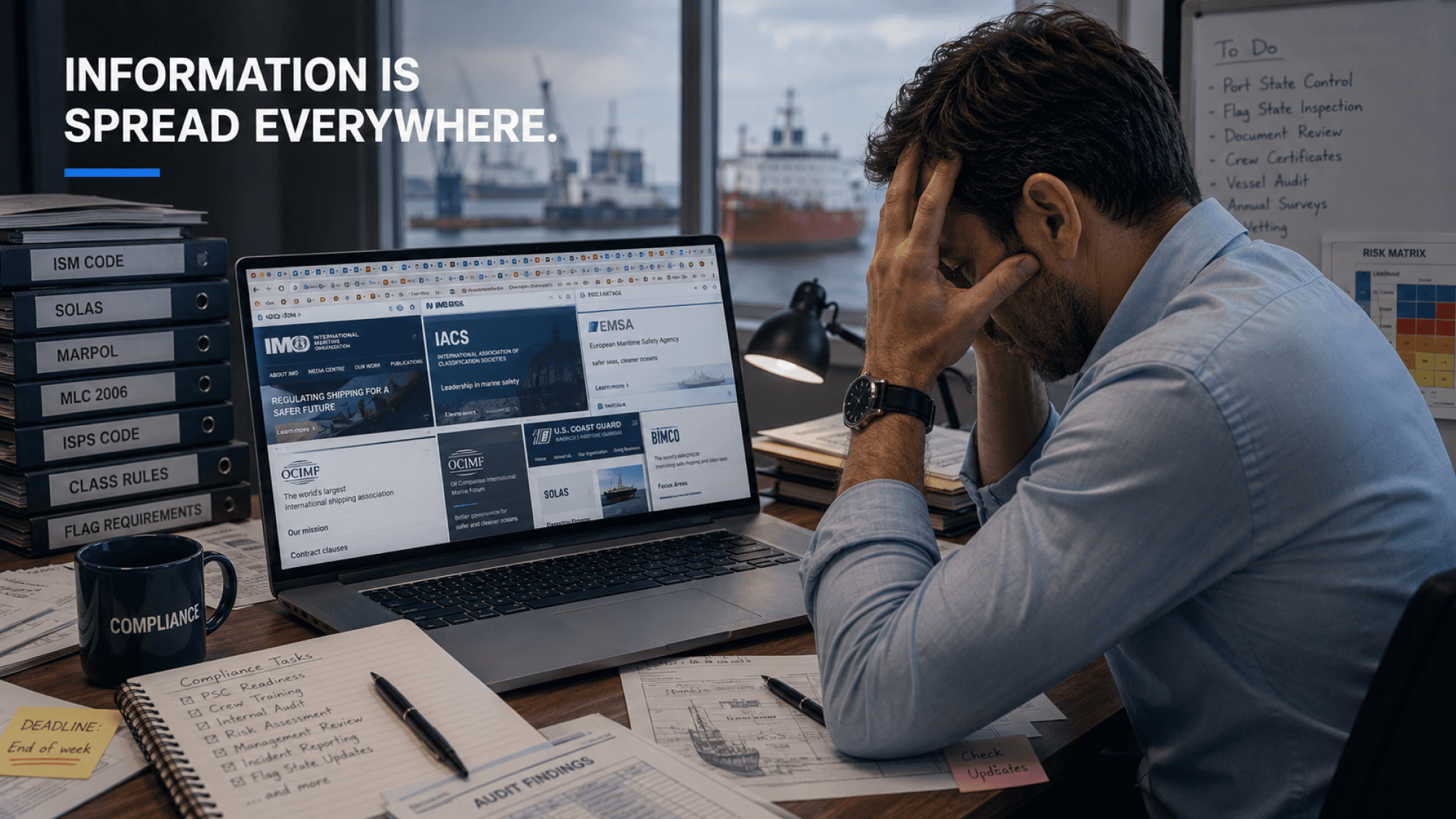
A technical superintendent, compliance manager, or vessel operator may need to monitor updates from IMO, flag administrations, classification societies, and port authorities at the same time. As a result, important information is often spread across multiple websites, emails, circulars, and databases.
High Volume of Updates
The challenge is not only the number of updates but also the increasing complexity of maritime decision-making. Recent maritime research highlights that fragmented systems, growing regulatory pressure, and disconnected workflows are making everyday operational decisions more difficult for shipping companies.
Difficulty Identifying What Is Relevant
Not every regulatory update applies to every vessel, fleet, or department. Teams often spend significant time reviewing information to determine what is relevant to their operations.
Manual Tracking Consumes Time
Many organizations still rely on email subscriptions, spreadsheets, shared folders, and manual monitoring processes to track regulatory updates. This approach can be time-consuming and difficult to scale.
Risk of Missing Critical Updates
When information is distributed across multiple channels, important regulatory changes can be overlooked, increasing the risk of delayed implementation or non-compliance.
Why Maritime Regulatory Requirements Continue to Grow
Understanding how to track IMO regulatory changes has become increasingly important as amendments, guidance documents, and regulatory circulars continue to expand across the maritime industry.
New IMO amendments continue to enter into force every year across SOLAS, MARPOL, STCW, and other conventions.
Classification societies maintain dedicated databases and update portals to help operators track regulatory changes.
Port State Control authorities increasingly rely on digital inspection systems and compliance databases to monitor vessel performance.
As regulatory information continues to expand, the challenge is no longer accessing information. The challenge is identifying which updates matter, understanding their operational impact, and ensuring the right teams act on them in time.
How Shipping Companies Manage Regulatory Compliance
Organizations that successfully manage regulatory updates for shipping companies typically combine structured review processes, centralized knowledge management, and digital monitoring tools.
Follow Official Sources
Monitor updates from:
- International Maritime Organization ( IMO)
- Flag administrations
- Port state authorities
- Classification societies
- Maritime administrations relevant to your operations
Official sources remain the most reliable place to access regulatory information and implementation guidance.
Subscribe to Regulatory Bulletins
Industry newsletters, circular alerts, and regulatory update services can help ensure important developments are delivered directly to relevant stakeholders.
Create an Internal Review Process
Assign responsibility for reviewing regulatory updates, assessing operational impact, and coordinating implementation across departments.
Maintain a Central Repository
Store regulations, circulars, guidance documents, and compliance-related information in a structured and accessible location. This helps teams locate information quickly when needed.
Use Digital Tools
Technology can help automate monitoring, organize regulatory information, improve searchability, and reduce the manual effort required to stay informed.
How Gyro Intel Supports Maritime Regulatory Monitoring and Compliance Management
One of the biggest challenges in maritime compliance is not the lack of information. It is the sheer volume of information available and the effort required to find what is relevant.
Regulatory updates, circulars, guidance documents, and operational advisories are published across multiple organizations, including the IMO, flag administrations, classification societies, and industry bodies. Maritime professionals often spend significant time monitoring these sources and determining which updates apply to their operations.
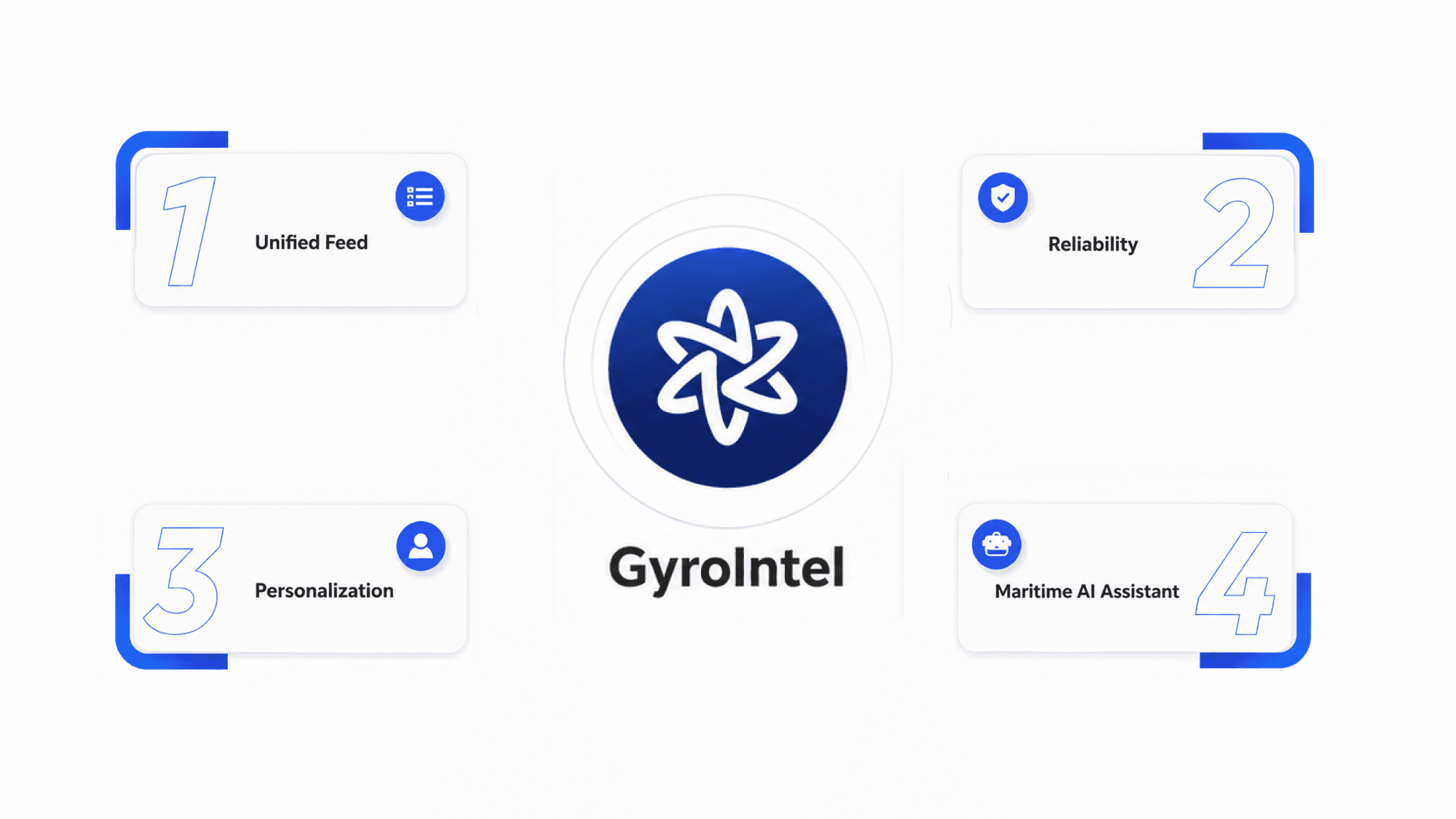
Gyro Intel was designed to simplify this process by bringing trusted maritime information into a single platform and making it easier to access, search, and act on.
Unified Access to Maritime Information
Instead of switching between multiple websites, newsletters, circular repositories, and databases, users can access maritime information through a single interface.
This helps reduce the time spent searching across fragmented sources and improves visibility into important regulatory and operational updates.
Built on Verified Maritime Sources
The quality of regulatory decisions depends on the quality of information.
Gyro Intel aggregates information from verified maritime authorities and organizations, including regulatory bodies, classification societies, and industry sources. This helps users access information from trusted sources while reducing uncertainty around accuracy and relevance.
Personalized Information That Matters
Not every regulatory update is relevant to every maritime professional.
A superintendent, vessel manager, compliance officer, and operations manager often require different information. Gyro Intel uses role-based personalization to surface relevant updates while filtering out unnecessary information, helping reduce information overload.
Search Maritime Knowledge in Natural Language
Finding information within lengthy circulars, regulations, and technical guidance can be time-consuming.
Gyro Intel's Maritime AI Assistant allows users to ask questions in natural language and receive structured answers based on verified maritime information sources. Instead of manually searching through multiple documents, users can quickly retrieve the information they need.
From Information Overload to Maritime Intelligence
At its core, Gyro Intel helps maritime teams move from fragmented information management to centralized intelligence.
By combining trusted sources, personalized content delivery, and AI-powered knowledge retrieval, the platform helps maritime professionals spend less time searching for information and more time making informed operational decisions.
Conclusion
Maritime organizations don't need more information. They need faster access to the right information. As regulations continue to grow across IMO, flag administrations, classification societies, and industry bodies, the companies that can turn information into action will be better positioned to maintain compliance, reduce risk, and make smarter operational decisions.