
 Maritime

Introduction
The AI in maritime industry conversation is often focused on automation, autonomous ships, and route optimization. But that misses a much bigger and more immediate opportunity.
Today, seafarers are not just managing vessels. They are managing systems, reports, compliance requirements, and constant streams of data. A large portion of their time is spent on documentation, searching for information, and ensuring procedures are followed correctly.
This is where AI in maritime industry is creating real impact. Not by replacing people, but by reducing workload and helping crews make faster, better decisions using the right information at the right time.
What is AI in Maritime Industry?
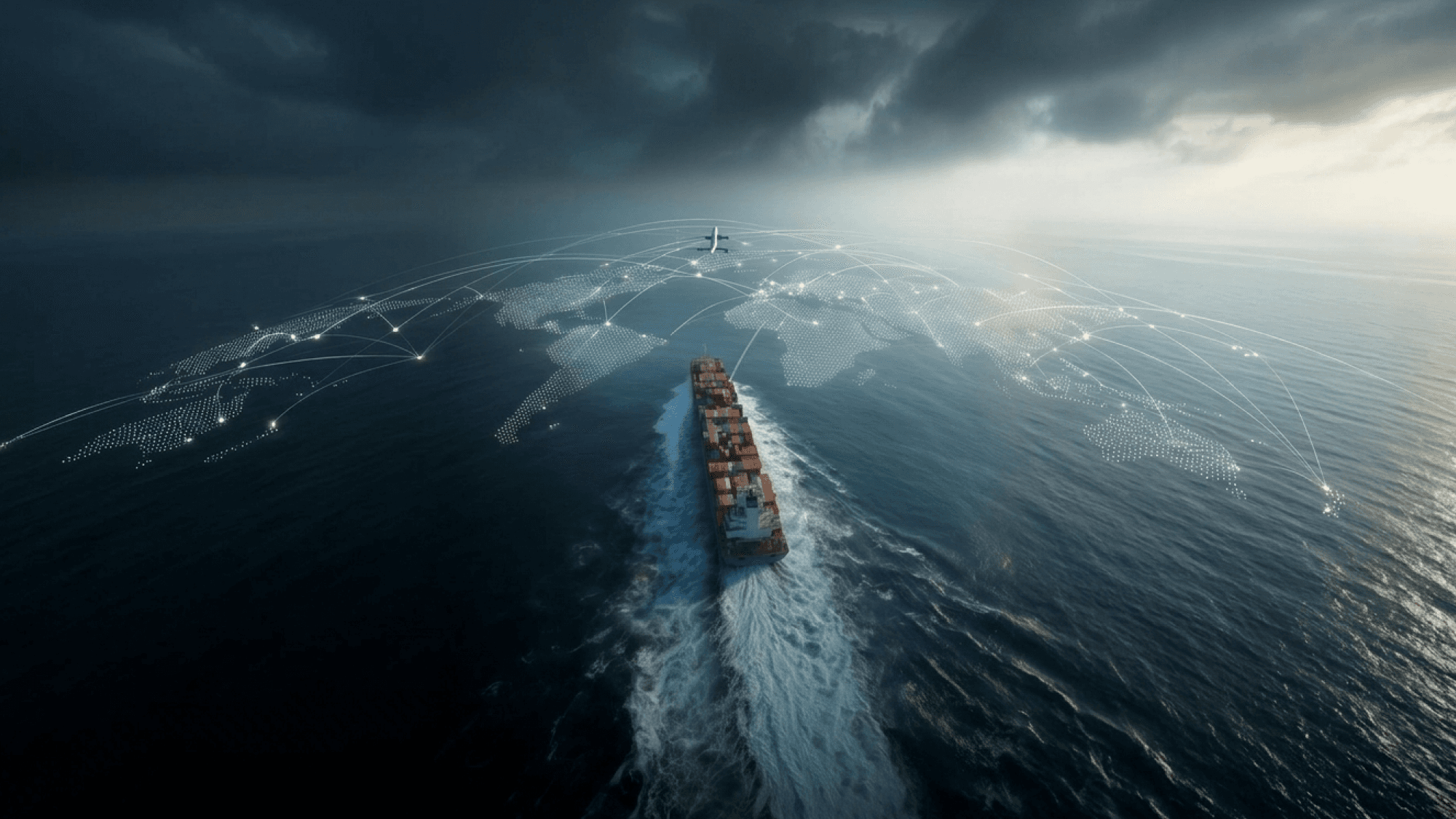
AI in maritime industry refers to the use of intelligent systems that can process large volumes of vessel data, understand patterns, and assist crews in operations and decision-making.
Instead of acting as standalone tools, modern AI systems function as:
- Data aggregators
- Decision support systems
- Real-time assistants for onboard crews
This shift is important. AI is no longer just about automation. It is about making complex maritime operations easier to manage.
How AI in Maritime Industry Reduces Documentation Work
One of the biggest inefficiencies onboard ships is manual documentation.
Crews are required to maintain:
- Daily logs
- Maintenance records
- Safety and compliance reports
- Inspection documentat
This process is repetitive and time-consuming.
How AI solves this problem
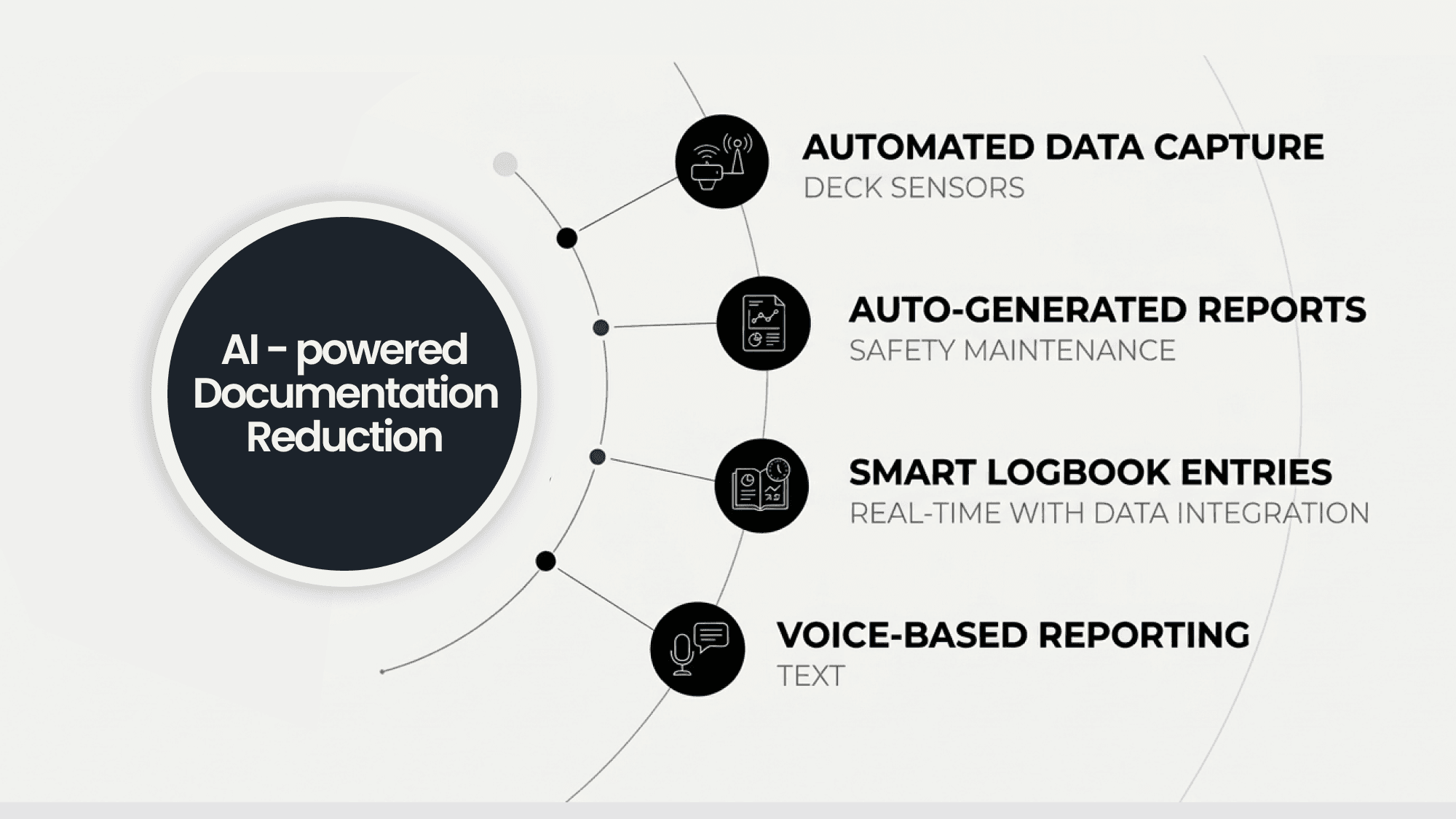
AI in maritime industry can significantly reduce this burden through:
- Automated data capture : Systems pull data directly from sensors and onboard equipment
- Auto-generated reports : AI creates structured reports without manual input
- Smart logbook entries : Logs are suggested or completed based on real-time operations
- Voice-based reporting : Crew members can describe events and AI converts them into formal records
Result
- Less administrative workload
- Reduced duplication of tasks
- More time for operational responsibilities
This is one of the most immediate and practical benefits of AI in maritime industry.
AI in Maritime Industry as a Decision Support System
Beyond documentation, the real strength of AI in maritime industry lies in decision support.
Onboard decisions often require accessing multiple systems:
- Maintenance history
- Safety procedures (SMS)
- Equipment manuals
- Operational data
This process can be slow and fragmented.
With AI, the process changes completely
Instead of searching across systems, crews can:
- Ask a question
- Receive instant, context-aware answers
- Get recommended actions based on real data
Example scenario
A crew member notices abnormal equipment behavior.
With traditional systems:
- Check logs
- Review manuals
- Contact shore teams
With AI:
- AI identifies the issue
- Provides maintenance history
- Suggests the correct procedure
- Highlights risk level
This transforms how decisions are made onboard.
Breaking Data Silos in Maritime Operations
A major challenge in the industry is disconnected systems.
Data exists across:
- PMS platforms
- SMS databases
- Navigation tools
- External data sources
But these systems rarely communicate effectively.
AI in maritime industry acts as a unifying layer that connects all these sources.
What this enables
- Centralized access to information
- Context-aware insights
- Faster response to operational issues
Instead of switching between systems, crews interact with one intelligent interface.
Impact of AI in Maritime Industry on Safety and Efficiency
When information becomes easier to access and use, the impact is immediate.
Improved Safety
- Faster access to correct procedures
- Reduced risk of incorrect decisions
- Better situational awareness
Higher Efficiency
- Less time spent on reporting
- Faster troubleshooting
- Streamlined workflows
Reduced Human Error
- Automated data entry
- Consistent reporting
- Guided decision-making
In high-risk environments like maritime operations, these improvements are critical.
Future of AI in Maritime Industry
The future of AI in maritime industry is not just automation. It is augmentation.
We are moving toward a model where:
- AI handles repetitive and data-heavy tasks
- Humans focus on critical thinking and operations
- Systems provide guidance instead of just information
This leads to a new type of workforce. One that is supported by intelligent systems rather than burdened by them.