
 Maritime

How AI Automation Services Help Businesses Reduce Manual Work
Many businesses spend hours on repetitive work like updating spreadsheets, sending emails, or chasing approvals. AI automation services remove this manual effort by turning these tasks into automated workflows that run in the background.
This blog is for business leaders and teams looking to reduce operational workload, improve efficiency, and focus on higher-value work instead of routine tasks.
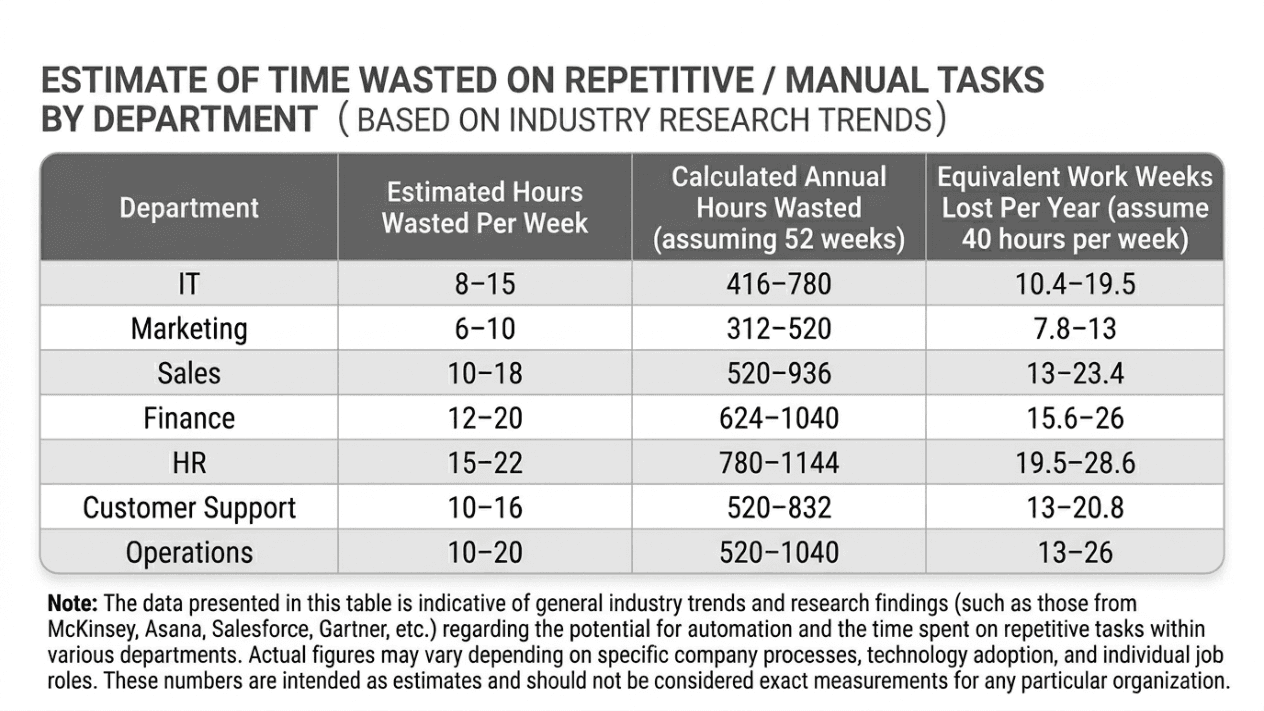
Many companies underestimate how much time is lost on repetitive tasks.
Teams often spend hours entering data, sending follow-ups, and managing small operational steps. Over time, this creates hidden inefficiencies across departments.
For example, manually updating CRM records or tracking approvals through emails slows down work and increases dependency on people.
Instead of focusing on strategy and growth, teams remain occupied with tasks that can be automated through ai workflow automation.
How AI Automation Services Work in Business Operations
AI automation services work by connecting tools and workflows so tasks move automatically without manual input.
For example, AI systems can:
- Capture leads from forms : Automatically collects customer data from websites or ads without manual entry
- Update CRM systems automatically : Adds and organizes data directly into CRM, keeping records always updated
- Send follow-up emails : Triggers emails based on user actions like sign-ups or inquiries
- Schedule meetings : Checks availability and books meetings without back-and-forth messages
- Process invoices : Extracts and records invoice data without manual typing
In a typical workflow, once a lead is captured, the system updates the CRM, assigns the lead, and triggers follow-up communication instantly.
These systems follow predefined workflows and improve over time, helping businesses complete tasks faster and with fewer errors.
Key Business Areas Where AI Workflow Automation Creates Impact
AI automation improves operations across departments where repetitive work is common.Common areas includs,
- Sales and CRM updates : Automatically tracks leads, updates pipelines, and reduces manual data entry
- Marketing campaigns and content workflows : Automates emails, content scheduling, and campaign execution
- Customer support responses : Handles common queries instantly using AI chat or email responses
- HR onboarding and internal queries : Automates document collection, FAQs, and employee onboarding steps
- Finance processes like invoices and approvals : Speeds up billing, expense tracking, and approval workflows
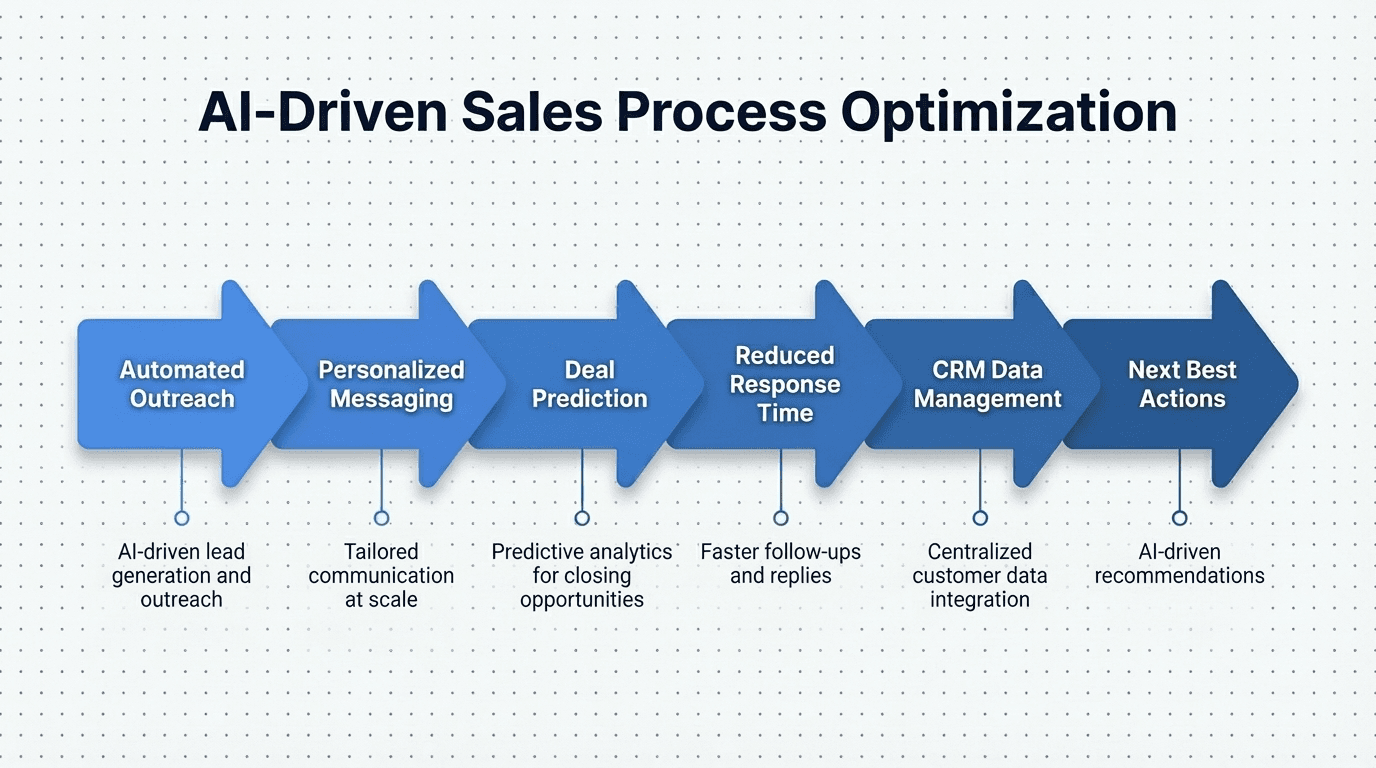
The image below illustrates how AI automation streamlines and enhances the sales process, from lead generation to smarter decision-making.
Benefits of AI Automation Services for Businesses
AI automation services deliver measurable operational improvements:
- Saves time : Removes hours spent on repetitive manual tasks
- Reduces errors : Minimizes human mistakes in data entry and workflows
- Improves productivity : Allows teams to complete more work in less time
- Lowers operational costs : Reduces dependency on manual effort and repetitive roles
- Enables focus on strategic work : Frees teams to work on decision-making and growth
These ai automation solutions help businesses shift from manual processes to faster, scalable operations.
The below comparison shows how AI automation shifts businesses from time-consuming manual work to faster, more efficient operations, improving productivity, reducing costs, and enabling scalable growth.
| Factor | Without AI Automation | With AI Automation |
|---|---|---|
| Time Usage | 50–60% time spent on repetitive tasks | More time focused on high-value work |
| Productivity | Slower output due to manual work | 20–40% higher productivity |
| Errors | More mistakes from manual entry | Fewer errors with automated processes |
| Cost | Higher costs due to manual effort | Up to 30% cost reduction |
| Employee Experience | Repetitive, low-value work dominates | Employees focus on high-value, creative tasks |
Signs Your Business Needs AI Automation
Your business may benefit from automation if:
- Employees spend hours on repetitive tasks : Time is being used on work that does not require human thinking
- Teams manually update CRM or spreadsheets : Data handling is slow and prone to errors
- Approvals are delayed across emails or messages : Workflows are dependent on manual follow-ups
- Customer responses are slow or inconsistent : Support systems are not scalable
- Errors frequently occur in operations : Manual processes are causing inefficiencies
These signs indicate that workflows are not optimized and can be automated.
How Businesses Can Start with AI Automation Services
A practical approach is to start small and focus on high-impact workflows.
- Identify repetitive processes : Look for tasks like data entry, scheduling, or FAQs that consume time
- Choose tools that integrate with existing systems : Ensure automation works with your current CRM, email, or tools
- Test automation in one workflow : Start with one process to measure results before scaling
- Gradually expand automation : Apply automation across departments once initial success is proven
Starting small reduces risk and helps teams adapt to automation smoothly.
How Falcon Reality Helps Businesses Implement AI Automation
Falcon Reality helps businesses convert manual workflows into AI-driven automation systems that fit into existing operations.
Using a structured approach, businesses can automate a specific workflow and deploy it into production in a short time.Typical implementations include:
- Automating lead management and CRM updates : Captures, assigns, and tracks leads automatically
- Handling internal queries and support tasks : Responds to common employee or customer queries instantly
- Streamlining approval workflows : Moves approvals automatically without manual follow-ups
- Automating repetitive operational processes : Reduces dependency on manual execution across teams
These systems integrate with existing tools, ensuring automation supports workflows instead of disrupting them.
Conclusion
AI automation services are changing how businesses operate by reducing dependence on manual processes.
Organizations that adopt automation improve efficiency, reduce costs, and allow teams to focus on strategic work. Businesses that implement automation early are better positioned to scale and stay competitive.